

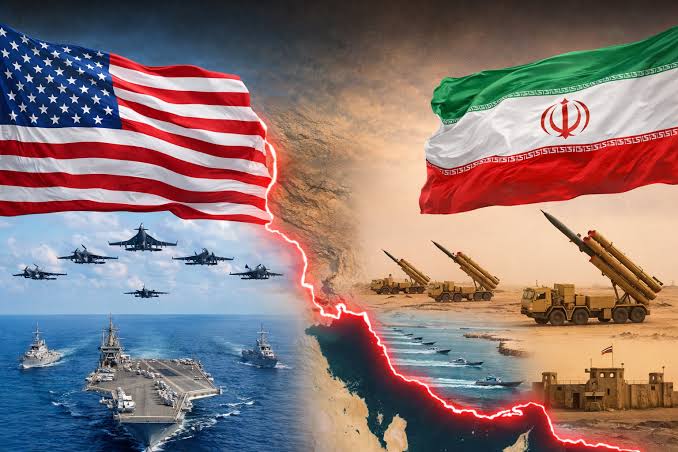
There is a comforting myth that distance protects us — that a war fought thousands of miles away stays there, contained, someone else's tragedy. This war has shattered that myth. Geopolitical analysts increasingly agree: even though the primary combatants sit an ocean apart, the damage moves like water, finding every crack, seeping into homes on both sides of the world.
Two Wars, One Wound
On Iranian soil, the devastation is immediate and visceral. Coalition air campaigns have torn into the basic scaffolding of civilian life — power grids flicker and die, port cities meant to move food and medicine sit choked by ruined logistics, hospitals run on generators and dwindling supplies. Military analysts describe a population trapped in a daily fight simply to keep the lights on and the water running, let alone to keep loved ones safe.
Reyhaneh Z., a pharmacist in Iran's Gilan province, told The New Humanitarian how quickly her shelves went bare once the war began. "By the second day, we couldn't fill prescriptions," she said — the warehouses were empty, and her suppliers told her their stock had been requisitioned by order of the Revolutionary Guard. Multiply her pharmacy by thousands, add a healthcare system in which the World Health Organization estimates over 300 emergency centers and clinics have been damaged or knocked out of service, and the shape of the crisis comes into focus: not one dramatic wound, but millions of small, compounding absences — the blood-pressure medication that isn't there, the dialysis filter that can't be replaced, the ordinary maintenance of staying alive.
Half a world away, American soil remains untouched by shrapnel or airstrikes — but experts caution that "untouched" is not the same as "unharmed." Iran's cyber units have pressed relentlessly against U.S. infrastructure, probing municipal water systems and rural electrical co-ops. And the economic shockwave doesn't need a passport. With a meaningful share of the world's oil and fertilizer supply bottlenecked through the Strait of Hormuz, ordinary families are meeting this war at the grocery store — in the price of bread, of gas, of keeping the heat on.
A U.S. farmer, describing the fallout to Farm Action, put it plainly: "Nitrogen in general and fuel both spiked because of the war." With Gulf urea exports — a key fertilizer ingredient — collapsed toward zero because of the Hormuz shutdown, the World Trade Organization has warned of ripple effects that could hit crop yields well into next year. It's the same story playing out at gas pumps nationwide, where prices have climbed well past pre-war levels and, according to economists, may not fully recede even after the fighting stops. No missile ever crossed the Atlantic. It didn't need to.
It's a strange kind of violence: one that never announces itself with sirens, but arrives instead as a number on a receipt, a bill you can't quite afford this month.
The Same Grief, Wearing Different Clothes
This is what regional specialists mean when they warn that infrastructure warfare doesn't discriminate — it just changes shape. A blockaded strait and a bombed power station are the same weapon pointed at the same target: not soldiers, but the fragile, ordinary machinery that lets people live their lives. A mother in Isfahan boiling water because the pipes are dry, and a mother in Ohio stretching a paycheck because fertilizer costs have driven up her grocery bill — these are not separate stories. They are the same story, told in two accents.
Why This Has to Stop
Wars are supposed to end when one side breaks the other's will. But there's growing consensus among analysts that this conflict has stopped functioning that way. Nobody's resolve is breaking. What's breaking is the electrical grid, the shipping lane, the household budget — the quiet infrastructure of daily survival that has nothing to do with anyone's politics.
The world cannot keep absorbing a war that manufactures inflation, hunger, and energy poverty as side effects. Every additional week of fighting is not a tactical necessity — it is a choice, made by people who will not be the ones standing in the cold or in the dark because of it.
It is time for a binding ceasefire. Time to lift the blockades. Time to trade kinetic destruction for the much harder, much slower work of diplomacy — because that work, unglamorous as it is, is the only kind that actually stops the bleeding instead of just describing it.

The world cannot keep absorbing a war that manufactures inflation, hunger, and energy poverty as side effects. Every additional week of fighting is not a tactical necessity — it is a choice, made by people who will not be the ones standing in the cold or in the dark because of it.